
How to Tell If Cod Is Fresh: 7 Signs to Check Before You Buy

Short answer: Fresh cod smells like the sea — clean and faintly briny, never sour or “fishy.” The flesh should look pearly and almost translucent, feel firm, and spring straight back when you press it. If the smell makes you step back, the surface feels slimy, or the flesh stays dented after a press, put it down and walk away.
Most people judge cod by the date on the label and hope for the best. The problem is that a date tells you when the fish was packed, not how it was handled on the way to the counter. The good news: cod gives you clear signals about its condition, and you can check most of them in about ten seconds. Here are the seven signs that matter, in the order a fishmonger would check them.
The 7 Signs of Fresh Cod
1. The Smell — Clean and Briny, Never Sour
This is the single most reliable test, and it needs no equipment. Fresh cod has a mild smell, closer to seaweed and salt water than to “fish.” The U.S. Food and Drug Administration (FDA) advises against buying any fish that smells sour, ammonia-like, or strongly fishy — those odors develop as fish spoils, and no amount of cooking fixes them.
One exception worth knowing: vacuum-packed cod can carry a faint “packaged” smell the moment you open it. Give it two or three minutes in the open air. A mild confinement odor fades; a sour or ammonia smell does not. If it’s still there after a few minutes, the fish goes back.
2. The Press Test — Flesh That Springs Back
Press the fillet gently with a fingertip (through the packaging if it’s wrapped). Fresh cod flesh is firm and elastic — it should spring back immediately and leave no dent. If your fingerprint stays pressed into the flesh, or the surface feels mushy and soft, the fish is past its best. This works because the proteins in fresh fish still hold their structure; as the fish ages, that structure breaks down and the flesh turns slack.
3. The Color — Pearly White and Slightly Translucent
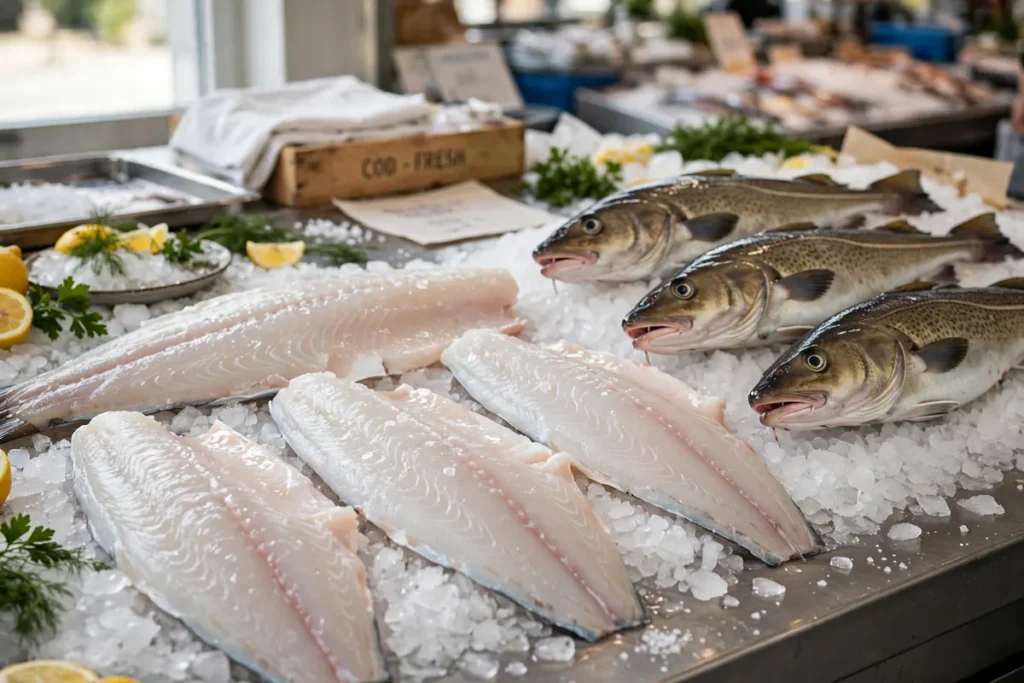
Fresh cod fillets are pearly white to very pale pink, with a moist, almost translucent look — you can nearly see light through a thin edge. Warning colors are yellow, grey, and brown, especially yellowing around the edges of the fillet or dark spots in the flesh. Dull, dry-looking patches are another bad sign: they mean the surface has been exposed to air too long.
4. The Eyes (Whole Cod) — Clear and Slightly Bulging
Buying a whole cod? Look at the eyes first. On a fresh fish they are clear, bright, and bulge slightly outward. Cloudy, milky, or sunken eyes mean the fish has been out of the water a long time. This is the oldest freshness test there is, and fishmongers still use it because it rarely lies.
5. The Gills (Whole Cod) — Bright Red or Pink
Lift the gill flap. Fresh gills are bright red to clean pink and look moist. As a fish ages, the gills fade to dull brown or grey and can turn slimy — a clear walk-away signal. If the fish counter staff won’t let you look, ask them to show you; a good fishmonger expects the question.
6. Skin and Surface — Moist Sheen, No Slime, No Gaping
Fresh cod skin has a clean, moist sheen, and the surface of a fillet should feel damp — never sticky or slimy. Sliminess is bacteria at work, and it doesn’t rinse off in any way that matters. On fillets, also check the flakes: the flesh should hold together in one piece. “Gaping” — where the flakes pull apart into separate segments — points to older fish or rough handling, and it makes the fillet fall apart in the pan later.
7. The Display and the Pack — Ice, Dates, Intact Seals
Step back and look at how the fish is being kept. Fresh cod should be displayed on a bed of ice or in a properly cold case, not sitting in pooled water. Check the use-by date, but treat it as backup evidence, not the main test. For frozen cod, the pack tells the story: the packaging should be intact and tight to the fish, with no heavy frost inside, no white freezer-burn patches, and no torn corners. Frost and freezer burn mean the pack has thawed and refrozen or sat in storage far too long.
Your 10-Second Checklist at the Counter
- Smell: mild, briny, clean — reject sour, ammonia, or strong “fishy” odors
- Press: firm flesh that springs back with no dent
- Color: pearly white, slightly translucent — no yellow or grey patches
- Eyes (whole fish): clear and bright, not cloudy or sunken
- Gills (whole fish): bright red or pink, not brown or slimy
- Surface: moist sheen, no slime, flakes holding together
- Display: on ice, cold case, intact packaging, sensible date
Three or more failures and it doesn’t matter how good the price looks — leave it. If you’re deciding where to shop in the first place, our guide on where to buy cod covers counters, markets, and online sellers in detail.
Fresh vs. Frozen: Why “Fresh” Isn’t Always Better
Here’s what the counter won’t tell you: much of the “fresh” cod in a supermarket has already been frozen once and thawed for display. Meanwhile, cod that is frozen at sea — filleted and frozen within hours of the catch — often reaches your kitchen in better condition than a “fresh” fillet that spent five days in transit. If the frozen pack passes the checks in Sign 7, buy it with confidence and thaw it properly at home. What you should never buy is a thawed fillet being sold at a premium as though it just came off the boat when the signs above say otherwise.
Freshness is about quality, by the way — taste, texture, and smell. It sits alongside, not instead of, basic food safety: for mercury levels, storage temperatures, and who should limit intake, see our cod safety guide.
How Long Does Fresh Cod Keep?
Not long — plan around it. The USDA advises using fresh fish within 1 to 2 days of buying it, stored in the coldest part of the fridge at 40°F (4°C) or below. Buying cod on Saturday for a Thursday dinner is asking the press test to fail. If your plans change, freeze it on day one: wrapped tightly, cod keeps its best quality in the freezer for around 6 months. Cooked cod keeps 3 to 4 days in the fridge.
Once You’ve Picked a Good Fillet
Choosing the cut matters almost as much as choosing the fish — a thick loin cooks very differently from a thin tail piece, so it helps to know your cod cuts before you buy. And when you get it home, our step-by-step guide on how to cook cod will help you do the fresh fish justice — gentle heat, dry surface, and don’t move it around the pan.
Frequently Asked Questions
Is it OK if cod smells slightly fishy?
A very mild ocean smell is normal. A noticeable “fishy,” sour, or ammonia-like smell is not — that’s spoilage, and the FDA’s advice is to not buy or eat fish that smells that way. Trust your nose over the label date.
How can you tell if cod has gone bad after cooking?
Bad cod usually announces itself before cooking — sour smell, slimy surface, dull color. If cooked cod tastes sour or ammonia-like, or the texture is mushy rather than flaky, stop eating it. When in doubt, throw it out; no meal is worth the risk.
Is frozen cod as good as fresh cod?
It can be better. Cod frozen at sea shortly after catching locks in quality, while “fresh” fish may be days old by the time it reaches the counter. Judge both by the same signs: intact packaging and no freezer burn for frozen; smell, firmness, and color for fresh.
Why does my cod fillet fall apart into segments?
That separation between flakes is called gaping. It happens with older fish, fish that was frozen and thawed roughly, or fillets cut from a fish that struggled before death. It’s a quality issue rather than a safety one — the fish is edible, but it won’t hold together in the pan, which is one more reason to check the surface before you buy.
Buy with your eyes and nose first, the label second — ten seconds at the counter is the difference between a fillet that flakes beautifully and one that disappoints before it even reaches the pan.
