
Cod Fish Fillets, Loins & Steaks: A Complete Cuts and Preparation Guide
Cod is sold in several cuts, including tapered fillets, thick loins, bone-in steaks and whole fish. Each cut has a different shape, thickness and texture, so the best cooking method depends on the portion you choose.
Understanding the differences helps you avoid uneven cooking and choose the right cut for baking, frying, grilling, poaching or roasting.

Quick answer: A cod loin is not the same as a cod fillet — it is the thickest, most uniform section of the fillet, cut from the upper back of large cod. A cod fillet is the whole side of the fish (thick at one end, thin at the other), while the loin is a premium, boneless block cut only from the thickest part. Below is the full comparison: what a cod loin is, how it differs from fillets and steaks, and which cut to buy for your recipe.
1. Cod Fillets
A cod fillet is a lengthwise cut taken from one side of the fish. It is often sold boneless, although small pin bones may remain and should be checked before cooking.
Most fillets are thicker at one end and taper toward the tail. This uneven shape means the thinner section may cook before the thicker section is ready.
Best Uses
Cod fillets are suitable for:
- Baking
- Pan-frying
- Air-frying
- Deep-frying
- Tacos
- Fish sticks
- Fish nuggets
- Curries and stews
How to Handle Uneven Fillets
For even cooking, cut a large fillet into two or three portions of similar thickness. Alternatively, fold the thin tail end underneath itself so it has a thickness closer to the rest of the fish.
This is particularly useful when pan-frying or baking, because thin sections can dry out while the thicker portion is still cooking.
2. Cod Loins
A cod loin is a thick, meaty portion cut from the central part of a fillet. It is usually more uniform in thickness than a standard fillet and is commonly sold as a premium portion.
The term “loin” is mainly a retail and culinary description rather than a completely standardized anatomical cut.
Best Uses
Cod loins work well for:
- Oven-roasting
- Pan-searing
- Grilling
- Baking
- Poaching
- Restaurant-style plated dishes
Their thickness makes them easy to present as a centre-plate portion. However, a loin can still become dry if it is overcooked. Thick fish should be cooked carefully and checked at the thickest point.morrisons+2
3. Cod Steaks
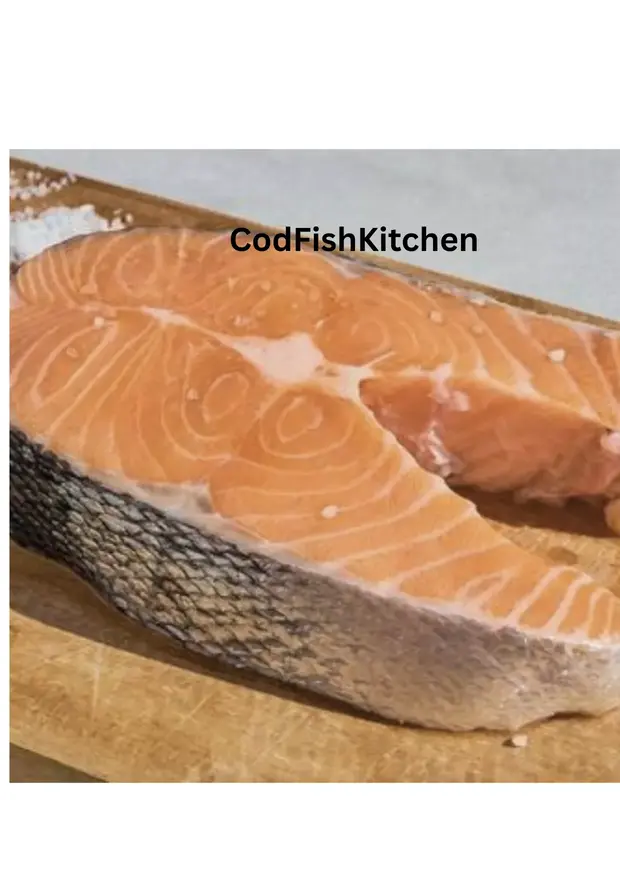
A cod steak is cut across the body of the fish rather than lengthwise. It may contain the central bone and, depending on how it is trimmed, some skin.
The bone-in structure gives the steak a traditional appearance and can help it remain intact during cooking. However, the bone does not guarantee even cooking or extra moisture, so timing is still important.
Best Uses
Cod steaks are suitable for:
- Grilling
- Baking
- Braising
- Poaching
- Tomato-based stews
Bone-in steaks can be more difficult to portion and eat than boneless fillets, but they work well in rustic or family-style dishes.
4. Whole Cod
A whole cod may be sold with the head, tail, skin and bones intact. It requires more preparation than a fillet or loin, but it can provide several useful parts, including the main fillets, cheeks, collar and bones for stock.
Buying whole fish is not automatically the cheapest option. Its value depends on the price, edible yield and the cook’s ability to use the trimmings.
Best Uses
Whole cod can be used for:
- Whole roasting
- Large family-style meals
- Fish stock
- Fish soup
- Using the cheeks and collar
Whole-Roasted Cod
Stuff the cavity with lemon, garlic, onion and fresh herbs. Brush the skin with oil and roast in a preheated oven at 200°C / 400°F.
The cooking time depends on the size of the fish. Cook until the flesh is opaque and flakes easily from the bone. For a precise safety check, the thickest part should reach 63°C / 145°F.USDA Food Safety and Inspection Service (FSIS)
Comparing Cod Cuts
| Cut | Bone status | Shape | Suitable methods | Common uses |
| Fillet | Usually boneless; check for pin bones | Tapered and uneven | Baking, frying, air-frying, poaching | Tacos, fish sticks and weeknight meals |
| Loin | Usually boneless | Thick and fairly uniform | Searing, roasting, grilling and baking | Centre-plate main dishes |
| Steak | Often bone-in; may include skin | Cross-sectional portion | Grilling, baking, poaching and braising | Rustic meals, stews and family-style dishes |
| Whole fish | Head, bones, skin and tail intact | Entire fish | Roasting and stock-making | Family meals and whole-fish presentation |
Cod Loin vs Cod Fillet: What’s the Difference?
The difference comes down to where the cut comes from. A cod fillet is the entire side of the fish cut away from the backbone — thick at the head end and tapering to a thin tail. A cod loin is only the thickest section of that fillet, taken from the upper back of large cod and portioned into uniform, boneless blocks about 3–5 cm (1–1.5 in) thick.
Because the loin is thick and even, it cooks uniformly and stays moist, which is why it is the premium cut for pan-searing and roasting — and why it costs more per pound. A standard fillet is the better everyday choice: cheaper, more versatile, and ideal for tacos, fish and chips, and frying, where the loin’s even thickness makes no difference. In short: loin for centre-plate dishes, fillet for everything else.
How to Prepare Raw Cod
Keep It Cold
Store raw cod in a refrigerator at or below 4°C / 40°F. Use it within 1–2 days of purchase, or freeze it if it will not be cooked promptly.
Keep raw seafood separate from ready-to-eat foods during preparation.
Do Not Rinse Unless Instructed
Raw cod usually does not need to be rinsed. Washing seafood can spread bacteria through splashes around the sink and work surface.
Instead, pat the fish dry with paper towels. Drying removes surface moisture and helps the fish brown rather than steam in the pan.
Avoid Cross-Contamination
After preparing raw cod, wash knives, cutting boards and counters with hot, soapy water. Sanitize them according to the instructions on the cleaning product before using the area for ready-to-eat food.
A separate cutting board for seafood can be helpful, but careful cleaning and sanitizing are the most important steps.
How to Judge Doneness
Raw cod is usually translucent, glossy and soft. As it cooks, it becomes opaque, firms up and separates into flakes.
The centre should be opaque and hot, but the fish should not be dry or rubbery. For a precise safety check, insert a digital thermometer into the thickest part of the portion. Cod should reach 63°C / 145°F.USDA Food Safety and Inspection Service (FSIS)
Cooking time depends on:
- Thickness of the portion
- Whether the fish is fresh or frozen
- Starting temperature
- Cooking method
- Whether the fish is covered
Frequently Asked Questions
Is a cod loin better than a cod fillet?
Neither is universally better. Cod loins are thicker and more uniform, making them convenient for roasting, searing and grilling. Fillets are more versatile and are often better for breading, tacos, frying and cutting into smaller portions.
How can you tell if raw cod has gone bad?
Fresh cod should have a mild, clean smell and firm flesh. Discard it if it has a strong sour, ammonia-like or rotten odour, an unusually slimy surface or soft, mushy flesh.
Do not rely on colour alone. Yellowing or darker edges can have several causes and are not a definitive freshness test. Always consider storage time, packaging and the use-by date.
Why does cod release water while cooking?
Cod may release excess liquid if it was previously frozen, not fully thawed, treated with added water or brine, or placed wet into the pan.
Pat the fish dry before cooking, preheat the pan properly and avoid overcrowding. Cook in batches if necessary. A crowded pan loses heat and causes the fish to steam instead of sear.morrisons+1
Should cod be salted before cooking?
Yes, but salt it shortly before cooking. Salting too far in advance can draw moisture to the surface, especially with thin fillets. Pat the fish dry again if necessary before placing it in the pan.
Which cod cut is best for grilling?
A thick cod loin or bone-in steak is usually easier to grill than a thin tapered fillet. Use a clean, well-oiled grill and turn the fish carefully with a wide spatula.
What is a cod loin?
A cod loin is the thickest, most uniform portion of a cod fillet, cut from the upper back of large cod. It is sold boneless and usually skinless as a block roughly 3–5 cm thick. Because it is thick and even, it cooks uniformly and is considered the premium cut of cod.
What are cod loins?
Cod loins are premium portions cut from the thickest part of large cod fillets. “Loins” (plural) simply means several portions — each one is a boneless block from the fish’s prime back section.
Are cod loins the same as cod fillets?
No. A cod fillet is the entire side of the fish, thin at the tail end and thick at the head end. A cod loin is only the thickest middle section of that fillet, cut into uniform boneless blocks. Think of the loin as the best part of the fillet, not a different fish.
Does cod loin have bones?
No — cod loins are sold boneless. The pin bones and backbone are removed during processing. Standard cod fillets should also be boneless, but they can occasionally contain a stray pin bone, which is another reason the loin is sold as a premium cut.
Do fish have loins?
The “loin” is a butcher’s term for the prime muscle along the back, and it applies to large fish just like it does to meat. On a cod, the loin is the thick, firm muscle running along the upper back — the part prized for its texture and even cooking.
Cod loin or fillet — which is better for fish and chips?
Regular cod fillet is the better choice for fish and chips. The batter and frying suit the standard fillet, and the loin’s premium price is wasted once it is battered. Save the loin for pan-seared or roasted dishes where its thick, even texture stands out.
Final Tips
Choose tapered fillets for everyday cooking, thick loins for even centre-plate portions, steaks for rustic bone-in dishes and whole cod for roasting or using multiple parts of the fish.
Whichever cut you choose, keep the fish cold, pat it dry, cook it gently and check the thickest part for doneness. Avoid overcooking, because even a thick cod loin can become dry when left on the heat too long.
Cod Loin vs Cod Fillet: Which Should You Buy?
Buy loin when the fish stays whole on the plate — grilling, pan-searing, or baking for guests. Buy fillet when the fish gets broken up — fish and chips, curries, stews, chowders, and fish cakes. Loin costs more because it is only the thickest centre section of a large fish; fillet gives you the same fish for less money whenever shape does not matter.
| Dish | Best cut | Why |
|---|---|---|
| Fish and chips | Fillet | Thinner pieces cook fast and flake into the batter |
| Grilling / pan-searing | Loin | Thick, even piece holds its shape and sears without falling apart |
| Curry / stew / chowder | Fillet pieces | Fish breaks up anyway, so paying for shape is wasted |
| Baking whole for guests | Loin | Uniform portions look plated and cook evenly |
| Fish cakes | Fillet | Gets flaked and mixed, so loin’s shape adds nothing |
What I buy: I mostly buy plain cod fillet. I haven’t had a purchase I regretted — fillet covers most of what I cook, and I buy loin only when the dish needs a thick, whole piece.
Cod Loin Cooking Times by Thickness
Times below are a guide — always confirm doneness with the fork test below.
| Thickness | Pan-sear | Oven (200°C) | Grill |
|---|---|---|---|
| ~2 cm | 3–4 min per side | 14–16 min | 3–4 min per side |
| ~3 cm | 4–5 min per side | 16–18 min | 4–5 min per side |
| ~4 cm | 5–6 min per side | 18–20 min (tray-bake) | 5–6 min per side |
Doneness test: the fish is done when it flakes easily with a fork and the flesh is opaque throughout. Standard doneness guidance is 145°F / 63°C internal temperature. Rest the fish for 2–3 minutes before serving — it keeps cooking off the heat.
Is Cod Loin Worth the Extra Price?
Loin costs more for three real reasons — it comes only from the thickest centre section of large fish, so there is less of it per fish; the portions are uniform, so there is almost no waste or trimming; and it survives high-heat cooking intact, which is what you pay for.
What I found: at the store I shop at in New York, loin generally costs about 5 to 7 percent more than fillet. The gap changes from store to store, so check the price where you shop. (Prices checked October 2026.)
When it is worth it: grilling, pan-searing, plated mains, cooking for guests. When it is not: anything where the fish gets broken up — curries, stews, chowders, fish cakes, fish and chips. There, fillet is the same fish for less money.
Cod Cuts FAQ
Does cod loin have bones?
Most cod loin sold in stores is boneless, because loin is cut from the thick back muscle away from the main bone. Still, run your fingers over the piece before cooking — a stray pin bone can survive trimming in any cut.
Is cod loin the same as cod fillet?
No. Loin is the thick centre section of the fillet — the premium, uniform part. Fillet is the whole side of the fish, thinner at the tail end. Same fish, different shape, thickness, and price.
Is cod loin better than cod fillet?
Better for some dishes, not for all. Loin wins for grilling, searing, and baking whole, because its even thickness cooks uniformly and holds its shape. Fillet wins for fish and chips, stews, and anything flaked or broken up — and it costs less.
What is a cod loin?
Cod loin is the thick, boneless centre cut from the middle of the fillet. It is the meatiest, most uniform part of the fish, which is why it is sold at a premium and recommended for grilling and baking.
What is cod fillet?
Cod fillet is the whole side of the fish with the bones removed — thinner toward the tail, thicker toward the head. It is the everyday cut: versatile, cheaper than loin, and right for frying, baking, curries, and fish cakes.
Does cod fillet have bones?
Cod fillets are sold boneless, but small pin bones can remain after filleting. Check by running your fingers along the flesh before cooking, especially with fresh (never frozen) fillets.