
Cod vs Tilapia: Which Is Better for You?


Cod and tilapia sit next to each other in nearly every fish counter, both white, both mild, both cheap-looking compared to salmon. Pick the wrong one for your goal and you either overpay or miss the nutrients you actually wanted. Here’s the side-by-side comparison with real USDA numbers, so you can decide in one read.
The Short Answer
Cod is the healthier fish overall. It’s leaner, lower in calories, and carries a far better omega-3 to omega-6 ratio. But tilapia has real advantages: it costs roughly half as much, has a touch more protein per serving, and is an excellent source of vitamin B12. If you’re feeding a family on a budget, tilapia is a perfectly good choice.
Cod vs Tilapia: Side-by-Side Comparison
Numbers are per 100 g of raw fish (USDA SR Legacy). Cooking method shifts the exact values slightly — baked is closest to these numbers.
| Cod | Tilapia | Winner | |
|---|---|---|---|
| Calories | 82 kcal | 96 kcal | Cod |
| Protein | 17.8 g | 20.1 g | Tilapia |
| Total fat | 0.7 g | 1.7 g | Cod |
| Omega-3 fatty acids | ~195 mg | ~220 mg | Tilapia (slightly) |
| Omega-6 fatty acids | ~5 mg | ~210 mg | Cod (by a mile) |
| Vitamin B12 | Good source | Excellent source | Tilapia |
| Vitamin B6 | ~2× tilapia’s amount | Lower | Cod |
| Mercury (FDA avg) | 0.111 ppm | 0.013 ppm | Tilapia |
| FDA mercury category | Best Choice | Best Choice | Tie |
| Taste | Mild, slightly sweet | Very mild, slightly sweet | Preference |
| Texture | Large, tender flakes | Firmer, smaller flakes | Preference |
| Typical price | Mid to higher | Budget (~half of cod) | Tilapia |
The surprise for most people: tilapia actually contains slightly more total omega-3 than cod. Cod wins the fat story anyway, because its omega-6 content is almost zero — and it’s the ratio of omega-6 to omega-3 that matters for inflammation, not the omega-3 number alone.
Calories and Protein
Both fish are genuinely lean, high-protein foods. A 100 g portion of cod gives you 82 calories and 17.8 g of protein; the same amount of tilapia gives 96 calories and 20.1 g of protein. Cooked, that works out to roughly 19–20 g protein per 3-ounce cod fillet versus 22–23 g for tilapia.
The difference is real but small. If your only goal is protein per dollar, tilapia wins. If you’re cutting calories, cod’s 14-fewer-calories-per-100-g edge adds up across a week — and cod’s higher protein-per-calorie ratio keeps you fuller on less. For a full breakdown of cod’s macros, see our cod nutrition facts guide.
Fat and Omega-3s: The Ratio Matters More Than the Number
This is where the two fish genuinely diverge. Cod carries about 195 mg of omega-3 per 100 g with barely 5 mg of omega-6 — a ratio your heart will thank you for. Tilapia carries a touch more omega-3 (~220 mg) but comes with ~210 mg of omega-6 riding along.
Omega-6 isn’t poison — it’s an essential fat. The problem is that most modern diets already run heavy on omega-6 from seed oils and processed food. Adding a fish that brings a 1:1 omega-6-to-omega-3 ratio does nothing to fix that imbalance; cod’s ratio, roughly 40:1 in favor of omega-3, actively helps. If heart health is why you’re eating fish, cod is the better pick. (For perspective, salmon still beats both — but that’s a different comparison.)
Vitamins and Minerals
Cod is the more micronutrient-dense fish overall: strong in vitamin B12, niacin, vitamin B6 (about double tilapia’s level), phosphorus, and selenium. Tilapia’s standout is vitamin B12 — it’s an excellent source, covering well over 200% of the daily value per 100 g in nutrition-database comparisons — plus solid selenium and potassium.
Neither fish is a vitamin D powerhouse, and both deliver useful iodine and phosphorus. Bottom line: cod covers more bases; tilapia has one standout (B12) and holds its own on minerals.
Mercury: Both Are Safe, Tilapia Is Lower
Mercury is the question that keeps people away from fish counters, so here’s the straight answer from the FDA’s own data: tilapia averages just 0.013 ppm mercury — among the lowest of any commonly eaten fish. Cod averages 0.111 ppm. Both sit comfortably in the FDA’s “Best Choice” category, meaning 2–3 servings a week is fine for everyone, including pregnant women.
So yes, tilapia wins on mercury — but it’s a win that changes nothing in practice, because cod’s level is already low enough that health agencies recommend it freely. Read our full cod safety guide (mercury, pregnancy, allergies) for the complete picture.
Taste and Texture
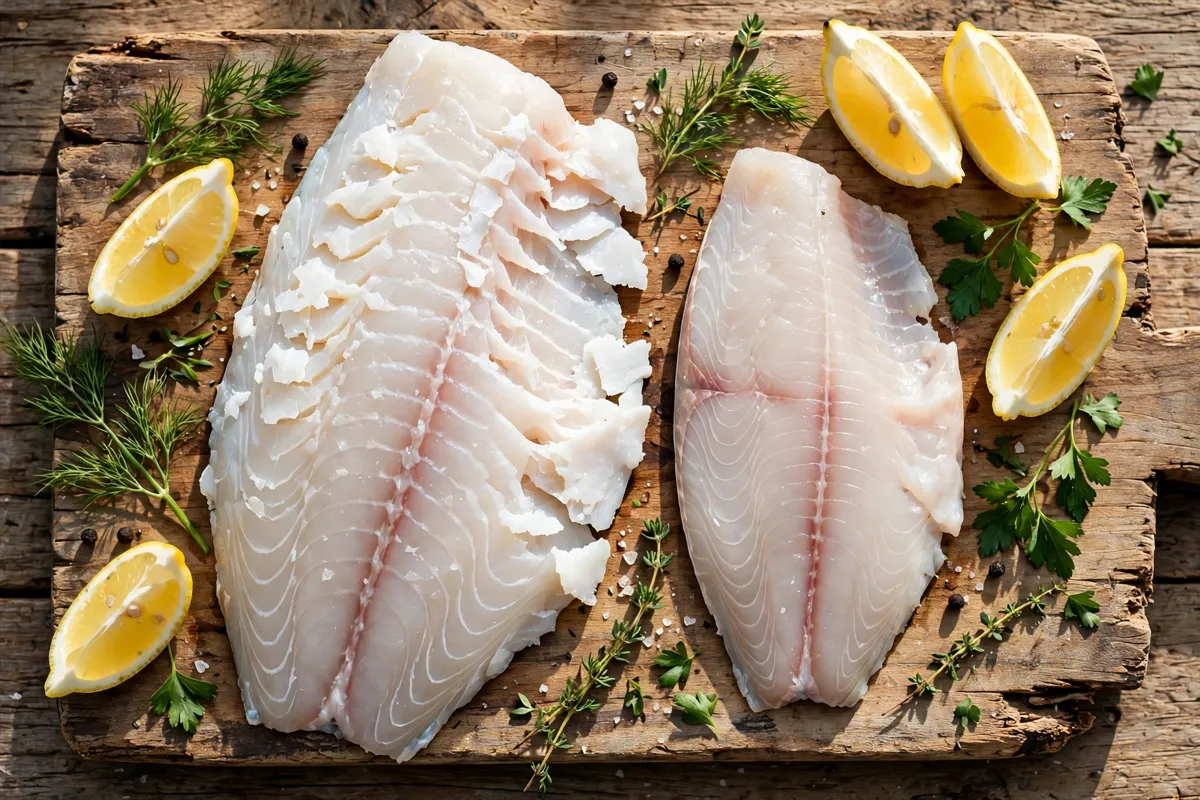
Cooked side by side, the difference is obvious. Cod breaks into large, tender, almost pearly flakes with a mild, faintly sweet flavor — it’s the classic fish-and-chips fish for a reason. Tilapia is firmer with smaller flakes and an even milder, slightly sweet taste; some people call it the “chicken breast of fish” because it takes on whatever seasoning you give it.
If you’re new to fish or cooking for picky eaters, tilapia’s neutrality is a feature, not a bug. If you actually like the taste of fish, cod’s texture is more satisfying. Our what does cod taste like guide goes deeper on flavor and mouthfeel.
Price and Sustainability
At a typical US grocery counter, tilapia costs roughly half what cod does. That’s the single biggest reason tilapia outsells cod in many markets — and it’s a legitimate reason to choose it. A fish you can afford to eat twice a week beats a “healthier” fish you buy once a month.
Sustainability cuts both ways. Most tilapia is farm-raised — look for ASC or Best Aquaculture Practices certification on the label, which screens out the worst farming operations. Most cod is wild-caught; Atlantic cod stocks were badly overfished, so choose Pacific cod (or MSC-certified Atlantic cod) if sustainability matters to you. When buying either fish, our fresh-vs-frozen buying guide covers what to check at the counter.
Which Should You Buy? A Decision Guide
- Losing weight: Cod. Fewer calories, less fat, and more protein per calorie keep you fuller on a deficit.
- Feeding a family on a budget: Tilapia. Half the price, slightly more protein, and the mercury level is the lowest around.
- Heart health: Cod. The omega-6-to-omega-3 ratio is dramatically better.
- Fish and chips night: Cod, no contest — the big flakes are what the dish is built on. See our perfect fish and chips guide.
- Tacos or heavily seasoned dishes: Tilapia’s neutral flavor and firm texture hold up better. (Our cod tacos guide works with either.)
- Picky eaters / kids trying fish: Tilapia — the mildest-tasting option of the two.
And honestly? The best fish is the one you’ll actually eat twice a week. Both beat skipping fish entirely.
Cooking Notes
Cod’s thick flakes love high-heat, fast methods: battered and fried, baked at 220°C/425°F, or pan-seared. Because it’s so lean, watch the clock — cod goes from perfect to dry in about two minutes. Tilapia’s thinner fillets cook even faster and do well with marinades, blackening spice, and stir-fries where the firm texture holds together. Start with our how to cook cod basics, then browse the best cod recipes roundup for ideas that work with either fish.
Frequently Asked Questions
Does cod taste like tilapia?
Close but not the same. Both are mild white fish, but cod has larger, more tender flakes and a slightly more pronounced (still mild) flavor. Tilapia is firmer and even milder — the blank canvas of the two.
Is tilapia bad for you?
No. Tilapia is a lean, high-protein fish with very low mercury, and the FDA lists it as a “Best Choice.” The omega-6 criticism is real but overblown — a serving of tilapia has less omega-6 than a tablespoon of most cooking oils. It’s a healthy food; cod is just healthier on balance.
Which fish has less mercury, cod or tilapia?
Tilapia — 0.013 ppm versus cod’s 0.111 ppm (FDA averages). But both are in the FDA’s lowest-mercury “Best Choice” category, so neither should worry you.
Which is better for weight loss?
Cod, narrowly. It has about 14 fewer calories and 1 g less fat per 100 g, with nearly the same protein. Over weeks of regular meals, that adds up.
Can I substitute tilapia for cod in recipes?
Usually yes. Reduce cooking time slightly — tilapia fillets are thinner and cook faster. In heavily seasoned dishes (tacos, curries, blackened fish) the swap is nearly invisible.
The Bottom Line
Cod wins on health; tilapia wins on price. Choose cod when nutrition is the priority — weight loss, heart health, or the best omega profile. Choose tilapia when budget or picky eaters decide — it’s still a lean, low-mercury, high-protein fish that nutritionists are happy to see on a plate. Either way, you’re eating well.
Sources: USDA FoodData Central (SR Legacy, values per 100 g raw); U.S. FDA mercury-in-fish table (“Best Choice” category); nutrition-database comparisons for B-vitamin values. Prices reflect typical US grocery ranges and vary by region and season.